


TOPEKA, Kan. — KSHB 41 reporter Rachel Henderson covers neighborhoods in Wyandotte and Leavenworth counties. Share your story idea with Rachel.
—
A deadly officer-involved shooting in Kansas City, Kansas sparked my reporting on how law enforcement across the region approaches mental health crisis calls.
An officer shot and killed 36-year-old Jesse James West on November 6 during a mental health call in KCK. That response is under investigation.
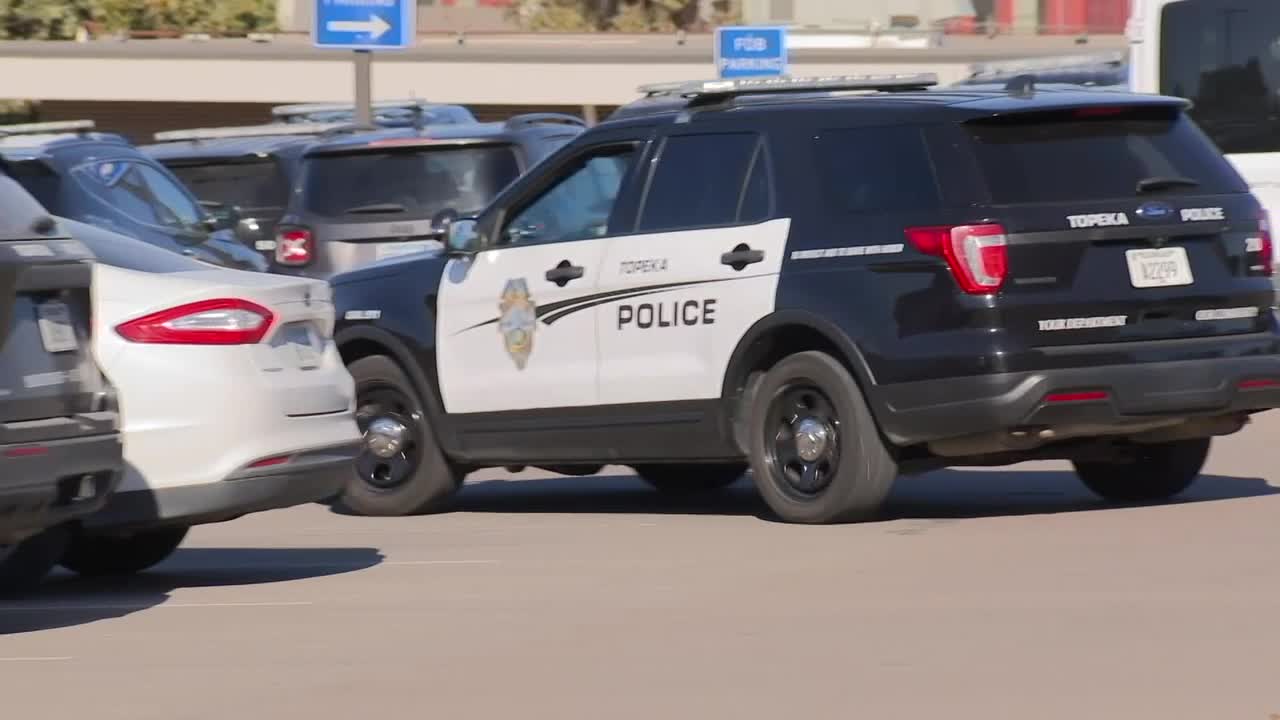
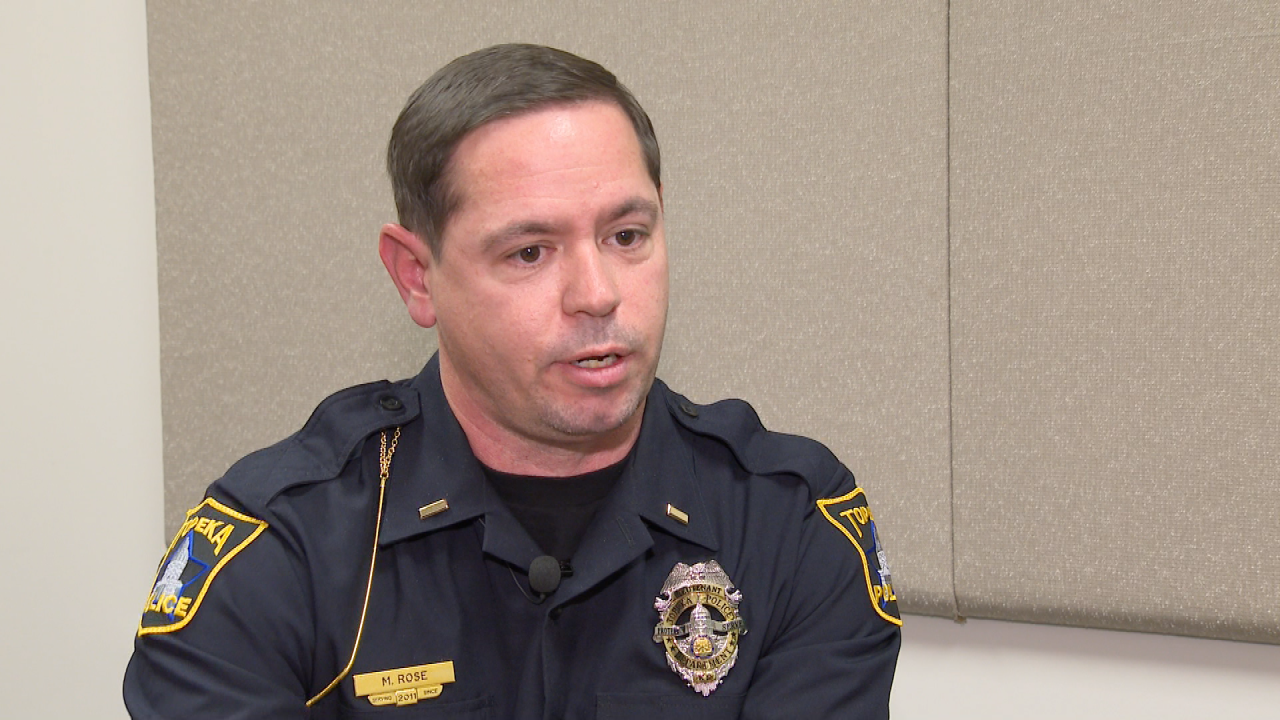
As part of my coverage, I traveled to Topeka, where Lt. Mathew Rose — who serves as the department's lieutenant over support operations and previously served as the Behavioral Health Unit sergeant — opened up about the police department's approach to crisis response.
Watch the full report:
"Transparency is very important, especially here in Topeka," Rose said.
Rose oversees the Topeka Police Department's Behavioral Health Unit and spoke about the volume and complexity of mental health calls his officers face every day.
"With our higher population for mental health calls, two-thirds of our calls are mental health-related," Rose said.
Rose said that reality demands a certain level of readiness from every officer — not just those in specialized units — and directly addressed a question he hears often.
"A lot of people wonder why law enforcement is involved in mental health at all, but it's such a key, big part of our day-to-day operations," Rose said. "We have to know how to respond to someone experiencing schizophrenia or somebody that is suffering from bipolar disorder and how we can tailor our response to that person to end in a mutually beneficial outcome."
The Topeka Police Department established its Behavioral Health Unit in 2013, following a police shooting in the early 2000s that served as a catalyst for change. The BHU has three officers and one supervisor — including one officer dedicated to homeless outreach. Officers wear khaki and polos and drive unmarked vehicles. The department follows the Memphis CIT model and maintains a victims assistance unit to support people who experience traumatic incidents.
The BHU operates from 8 a.m. to 9 p.m. Monday through Friday — a schedule Rose acknowledges falls short of what he'd like.
"I wish it was 24/7. Manpower does have its restrictions," Rose said.
That gap makes broad training across the department critical, particularly for overnight calls.
"That's the important piece to having all of your patrol officers CIT trained, is that those third-shift officers that don't have that support can at least deescalate the situation to make it safe for the evening," Rose said.
About 80% of the department's officers have had crisis intervention training. De-escalation is at the center of that work.
"De-escalation is one of the bigger pieces of CIT response to police calls. And knowing what underlying mental condition that you're dealing with can really help you tailor that de-escalation technique," Rose said.
The BHU uses a co-responder model, pairing an officer and a co-responder on each call. The department is looking to expand with co-responders who have specific specialties, like substance use and youth. Rose said that partnership approach is not just useful — it's necessary.
The co-responders are employed by Astra Mental Health & Recovery, a community mental health center in Topeka.
"The police department can't do these things by ourselves. And if we did, we might as well all be on patrol and not specialized at all," Rose said.
Rose said these calls don't follow a simple timeline.
"A lot of the calls that the behavioral health unit, those active crisis calls — those calls can last all day on a single person. You may get that call at 8 a.m. and you're still working with that person at 6 p.m., long after your shift was over," Rose said.
Building that investment starts with connection.
"You can't convince someone of doing the right thing without any kind of rapport-building at all," Rose said.
For Rose, the work comes down to a straightforward mission.
"Our goal in the behavioral health unit is to stop it before it becomes a tragedy and support both the person going through the issues and the family, to support them," Rose said.
He said families who reach out are often long past their breaking point before they ever make that call.
"By the time they're calling us, they're really at their wit's end trying to figure out what to do and how to get them into services. 'Cause they'd been trying for years and just don't know where to go," Rose said.

Follow up goes beyond CIT calls, but also tragedies.
Chris Vallejo, the police chief, outlined the department’s focus on outreach after a July 2023 police shooting.
“They affect everyone involved,” Vallejo said. “The individual who was shot, their loved ones, the officers involved and the community we all serve.”
Rose shared Topeka’s long and complex history with mental health while emphasizing the evolution that’s taken place in the city and, more specifically, the police department, to address it.
"We know a program like this prevents those incidents from occurring. That's 100 percent why it exists," Rose said.
He believes the long-term impact extends well beyond individual calls.
"I think the longer we go on and the more we do behavioral health, and behavioral health and mental health is a part of law enforcement and our approach to these calls, the more we reduce the stigma about mental health," Rose said.
I previously visited Overland Park as part of this coverage. My next stop is Lawrence.
This story was reported on-air by a journalist and has been converted to this platform with the assistance of AI. Our editorial team verifies all reporting on all platforms for fairness and accuracy.
—